What happens
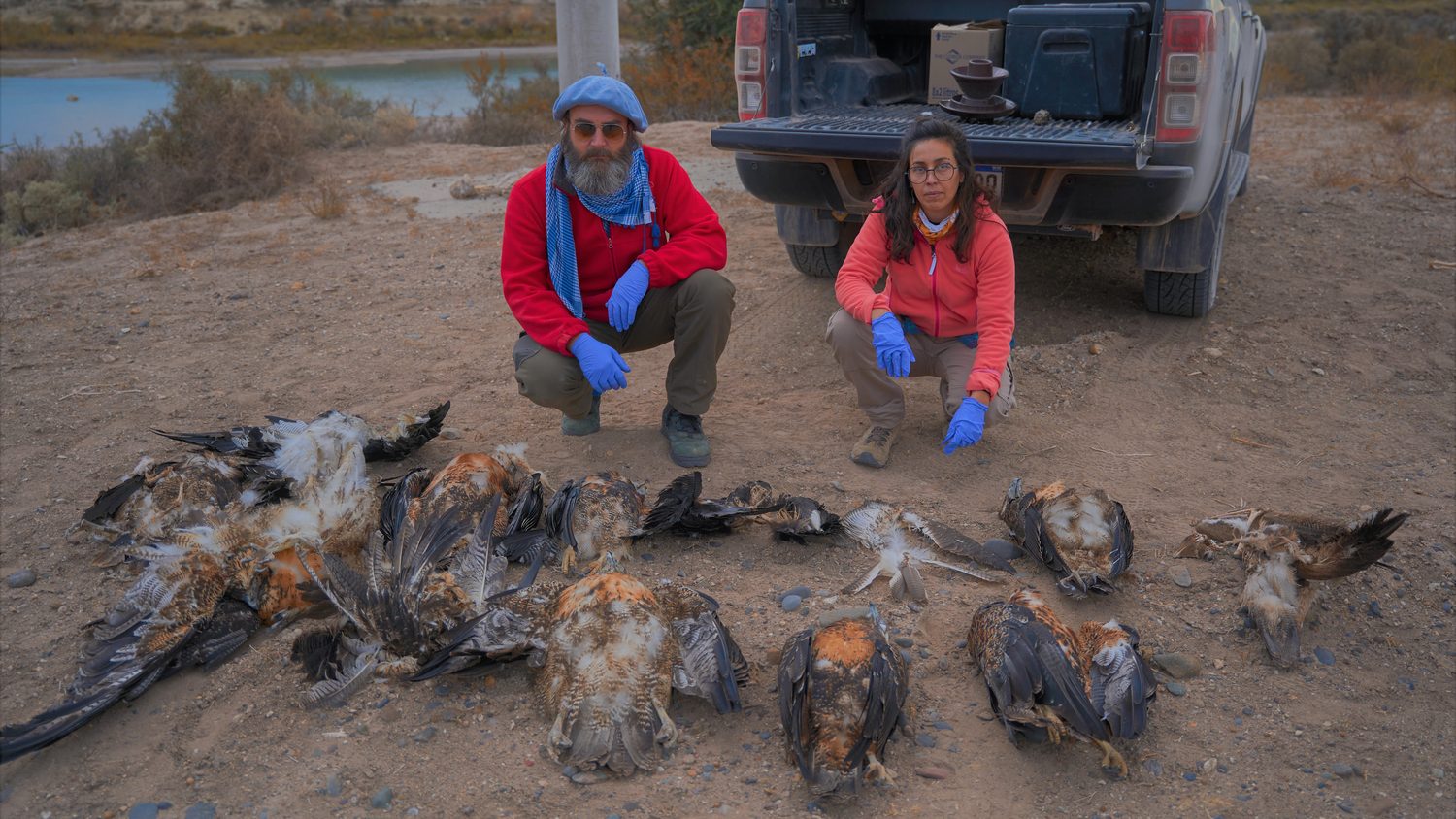
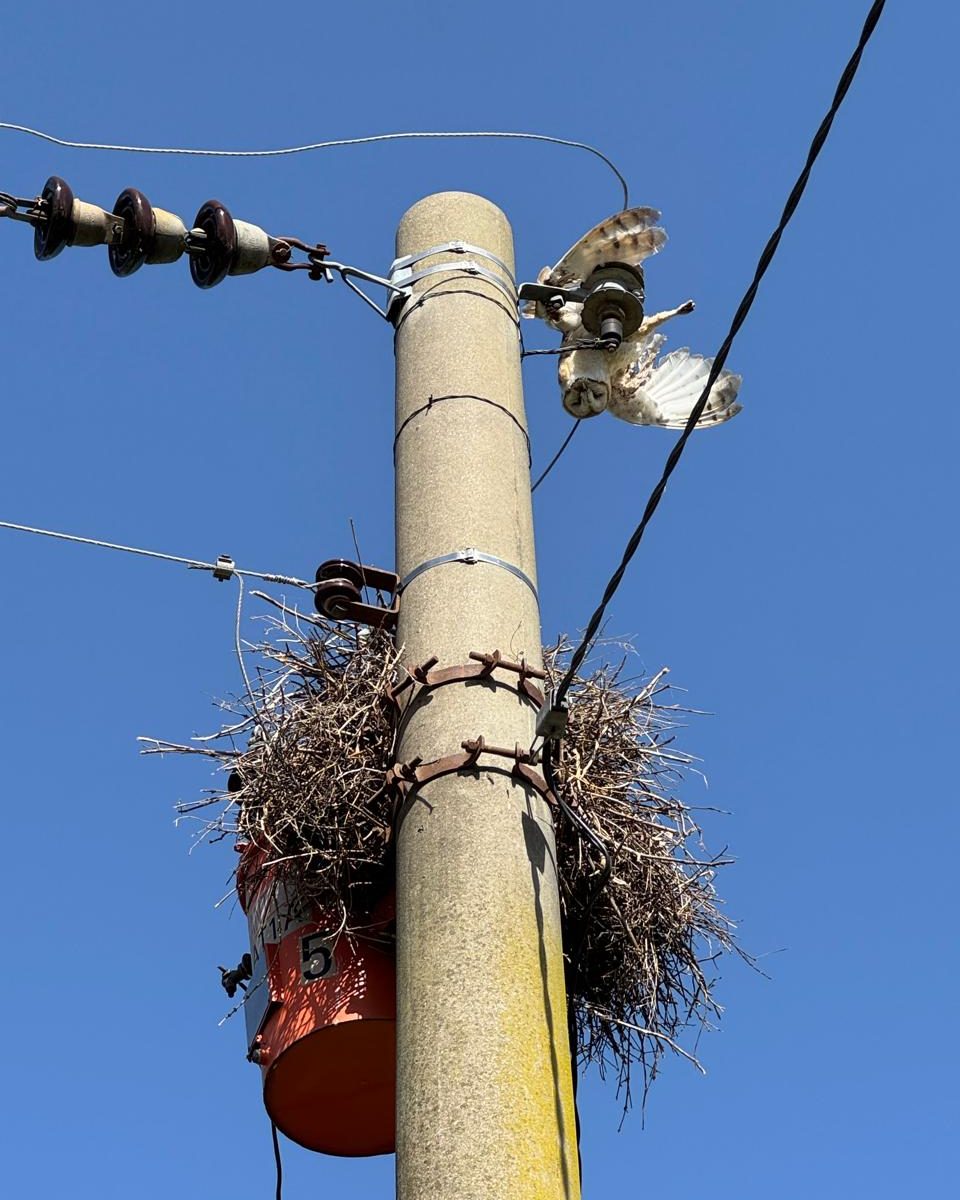
Raptors use power poles as perches: they are the highest point in the landscape and a good vantage from which to hunt. On a well-designed pole this has no consequence. On a badly designed one, a large bird spreading its wings can bridge two conductors, or a conductor and an earthed component, closing the circuit.
The discharge is almost always fatal, and it disproportionately affects the species with the largest wingspan — precisely those that are most threatened.
The fieldwork
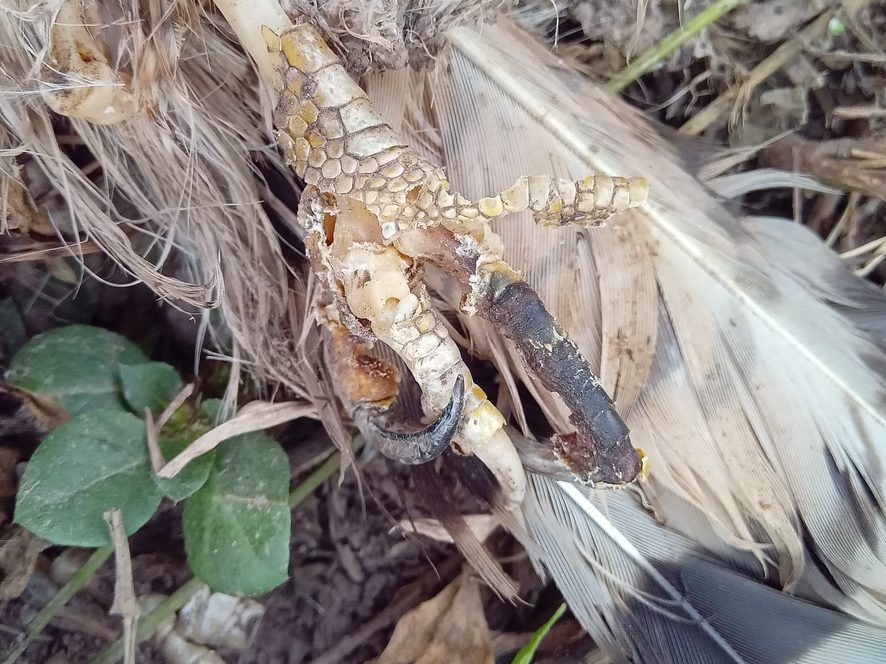
The survey means walking the lines on foot, pole by pole, recording remains, high-risk structures and evidence of electrocution. It is slow, unglamorous work, and it is what turns impression into evidence.
It can be solved
There are proven, low-cost solutions: insulating conductors near the pole and changing the arrangement of the crossarms, so that a large bird cannot bridge two live components when it spreads its wings.
Most are cheaper than repairing the line after a fault. The electrocution of a large bird causes power cuts, and in rangeland it also starts fires.
Why it matters
A modified line stops killing from the next day onwards. It is one of the few threats to biodiversity that can be solved with a technical decision and a work crew.