
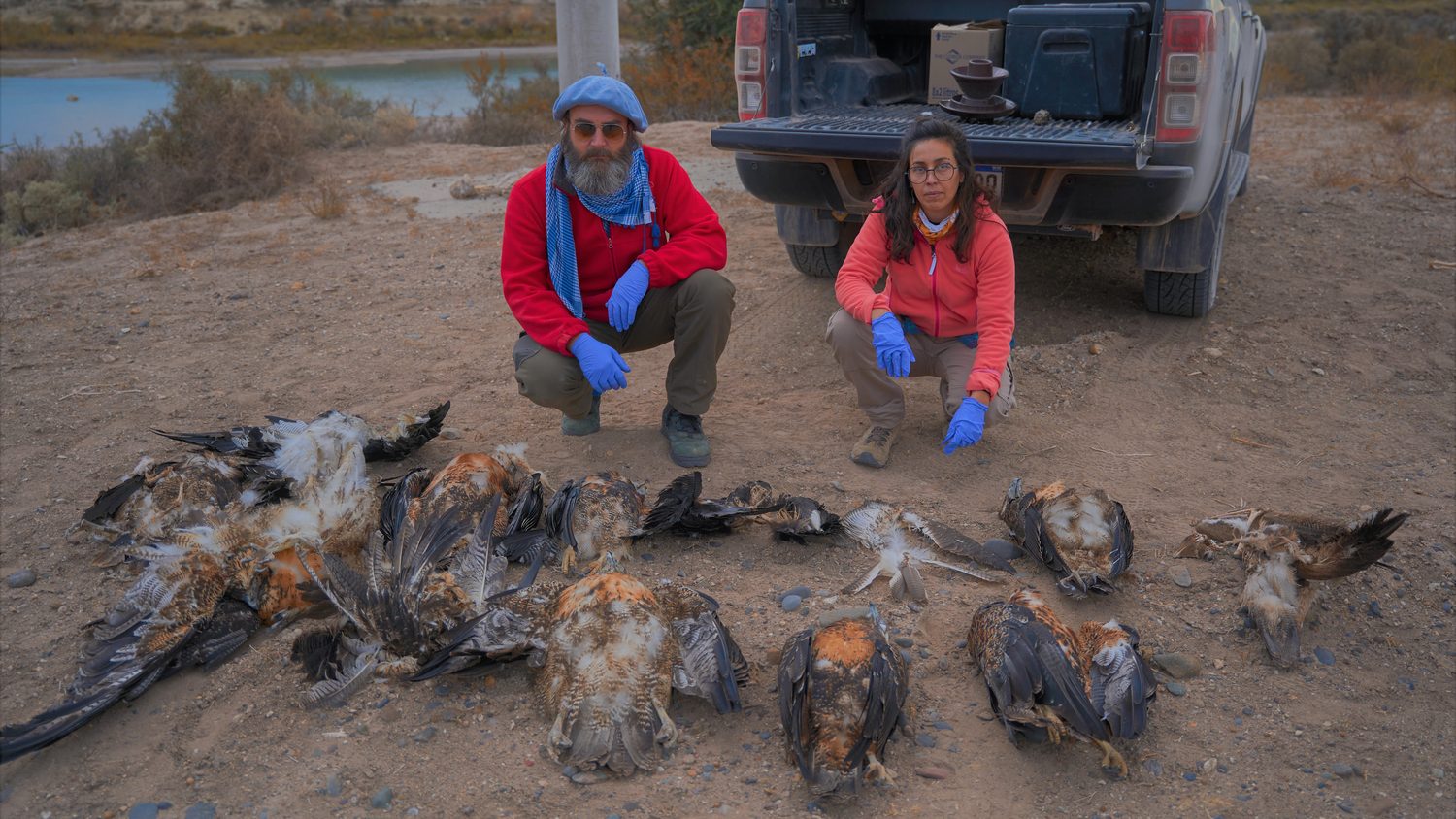
Power lines
Ten years walking power lines pole by pole, recording what we find at the foot of each one. We surveyed 1,379 poles on two provincial routes and documented which structures kill and which do not.
Long-term research, concrete interventions in the field, and outreach. These are the centre’s open fronts.
Ten years walking power lines pole by pole, recording what we find at the foot of each one. We surveyed 1,379 poles on two provincial routes and documented which structures kill and which do not.
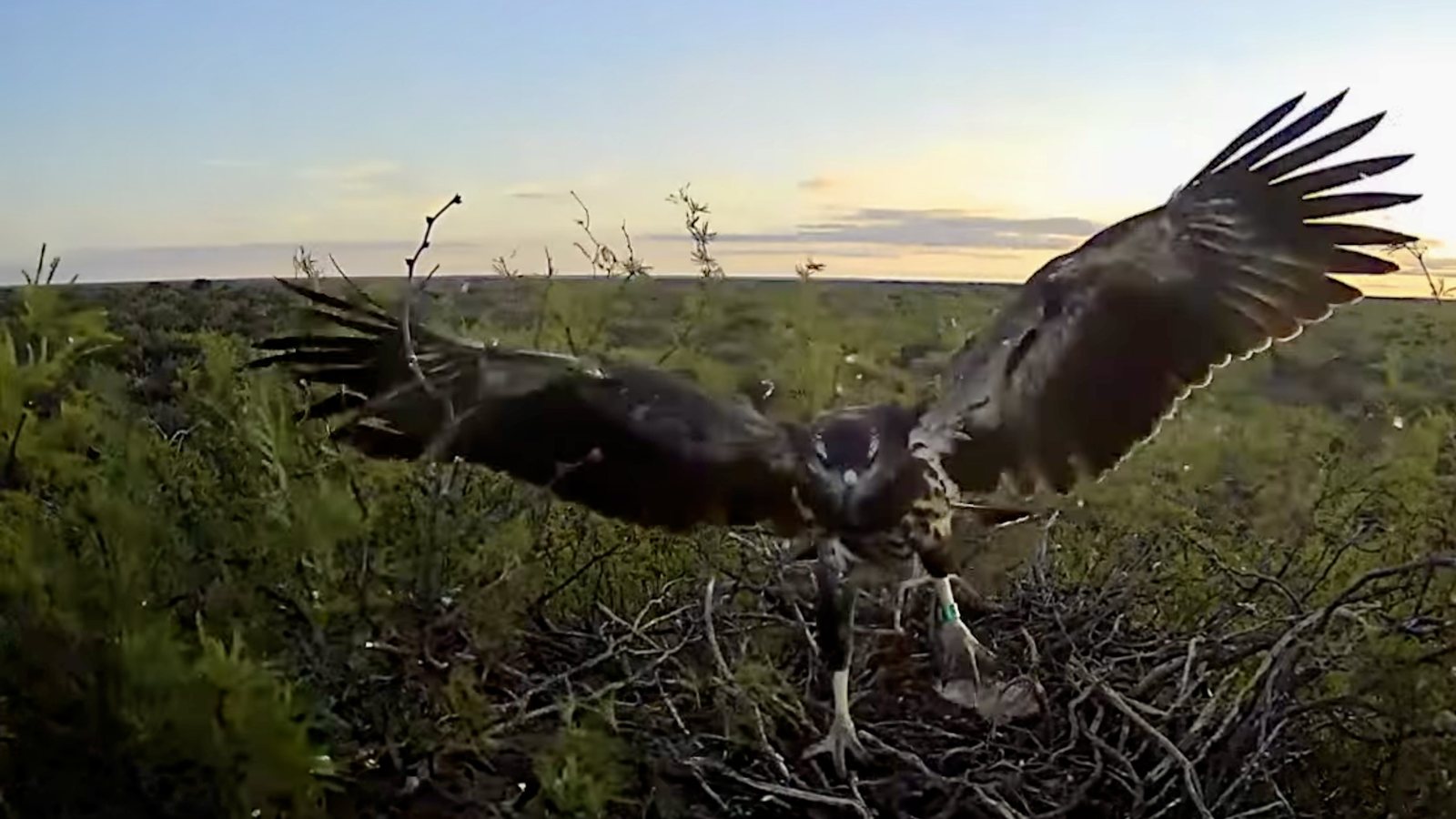
We placed a camera above a Chaco Eagle nest and left it streaming. In twelve days, more than 90,000 people watched Yupanqui exercise his wings until he flew.
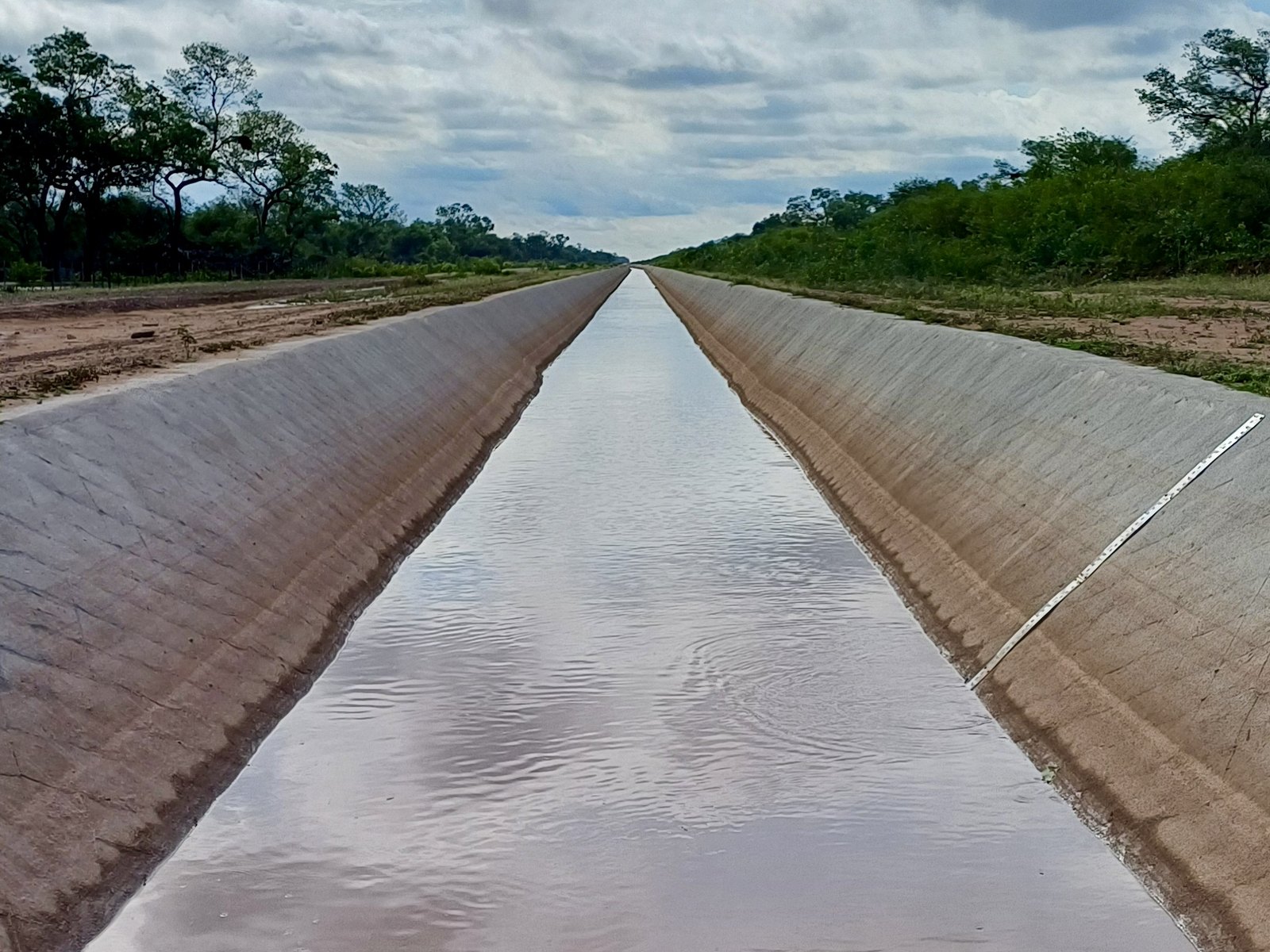
In the dry Chaco of Santiago del Estero, a 250-kilometre open-air concrete water canal splits the forest in two and lets nothing climb back out. Six surveys recorded 207 drowned animals of 35 species — and, worse, the figure falls over time because fewer animals are left to fall in.
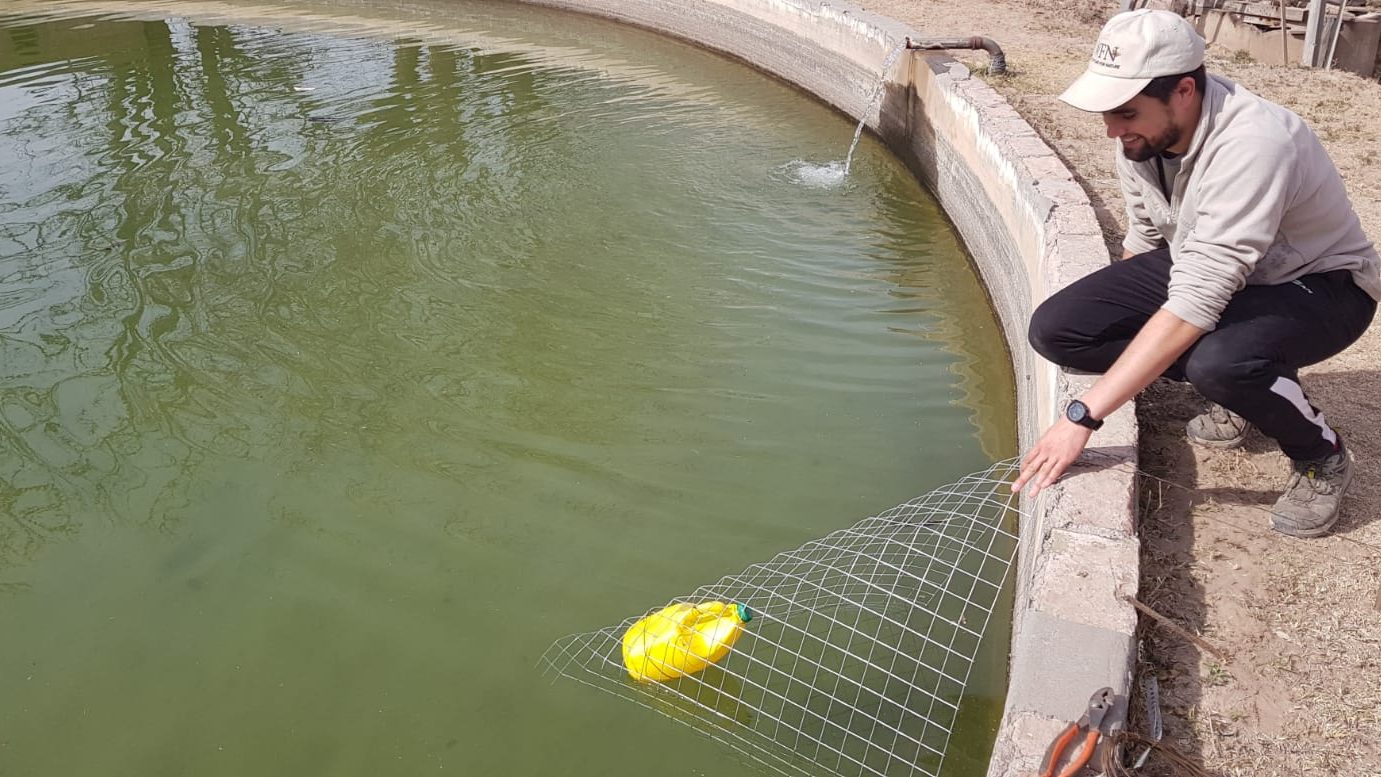
An estimated 250,000 wild animals drown each year in La Pampa’s water reservoirs, among them the Chaco Eagle and the Yellow Cardinal, both endangered. The rescue ramp — conceived and developed by José Hernán Sarasola — gives them a surface to climb out on. It has been installed on farms across the region for years.
The underlying scientific work: which species we study and which questions we try to answer.
The Chaco Eagle or Crowned Solitary Eagle is a threatened South American raptor. Its current range covers the Chaco region and central Argentina, where we study its breeding biology, space use and the factors behind its population decline.
Amid the current biodiversity crisis there is growing interest in understanding how human activity affects the services ecosystems provide. This project studies the vertebrate scavenger community and the carrion removal service it delivers.
Swainson’s Hawk breeds in the United States and Canada and migrates to southern South America during the boreal winter. La Pampa holds a significant share of its wintering range.
The Chimango Caracara is among the most abundant raptors of the Pampas and shows high plasticity in its habitat requirements. The project examines how that plasticity allows it to occupy agricultural and urban environments.
Assessment of power lines as a source of raptor mortality in central Argentina, identification of the highest-risk structures, and proposals for mitigation measures.
The gradual replacement of traditional farming with intensive production systems alters the availability of prey and nest sites. The project assesses the effect of that gradient on the species’ breeding performance.