Why they are a trap
A livestock water reservoir has smooth, vertical walls. An animal that comes down to drink, or falls in chasing prey, finds no way out: it swims until exhausted and drowns. It happens to foxes, rodents, reptiles and above all to birds, and it peaks in summer, when water is scarce and more animals come to drink.
Estimate based on the average number of animals drowned per reservoir and the number of reservoirs recorded in the province (INDEC, 2002).
Two endangered species among the victims
Birds are the most affected group, and among them are two species listed as endangered: the Chaco Eagle and the Yellow Cardinal.
In populations that are already small, every individual lost counts. And unlike other threats, this one can be solved without changing land use or productive activity.
Half
In the reservoirs monitored by the centre, those fitted with a ramp recorded 141 drowned animals against 283 in those without. Practically half.
And there is a benefit that matters to whoever owns the land: fewer drowned animals means less fouling of the water, which reduces how often the tank has to be cleaned.
The ramp
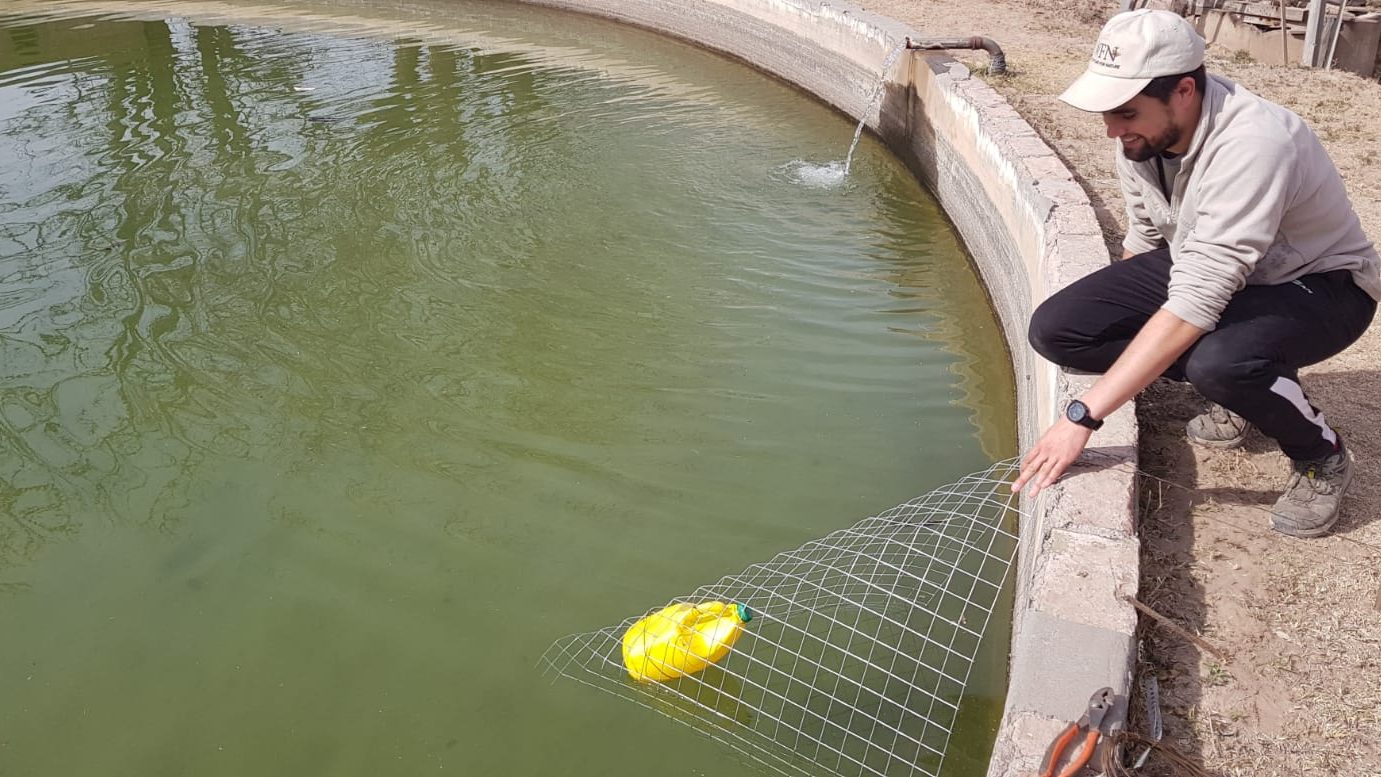
The rescue ramp is a simple solution, conceived and developed by José Hernán Sarasola, that has been installed on farms across the region for years. It sits inside the reservoir and gives the animal a surface to climb out on its own.
It is made from one square metre of wire mesh, the kind sold in any rural hardware store. Much of its value lies there: it depends on no supplier, needs no factory, and any farmer can build and fit one in an afternoon.
It needs no maintenance, no electricity, and nobody nearby. Once fitted, it works on its own.
And it works
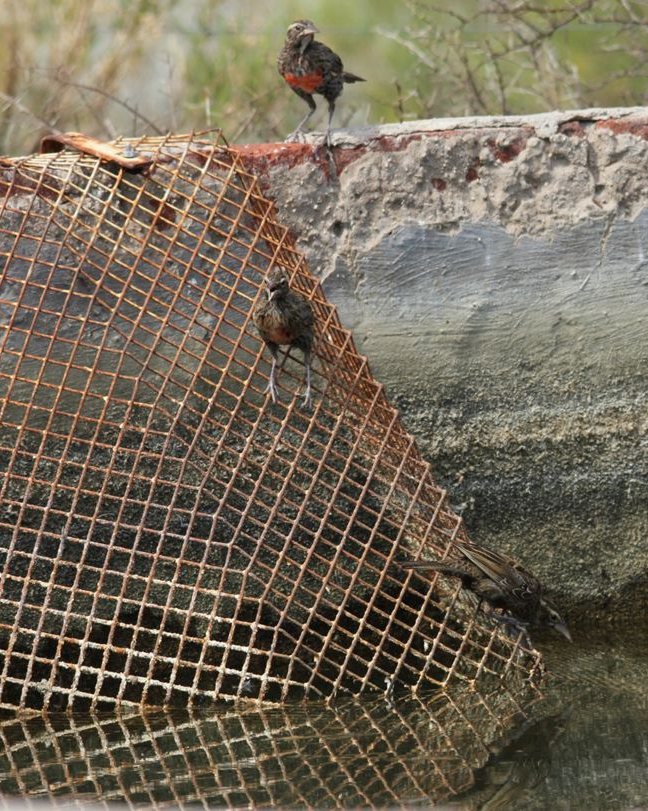
In this photo three birds are using the ramp at once: one on the rim, another gripping the mesh, and a third drinking right at the water. None of the three had to be rescued.
The ramp does more than prevent drowning: it turns the tank into a safe drinking place. In a semi-arid environment, where water is scarce for much of the year, that matters more than it seems.
It is not only a wildlife problem
Animals drowned in a reservoir affect the quality of the water the livestock drinks and, on many farms, the water rural families drink too. Preventing drowning is a conservation measure and a public health measure at once.
The project aligns with three of the United Nations Sustainable Development Goals: good health and well-being, clean water and sanitation, and life on land.